Last updated: May 2026 · By Sarah Chen, Head of Operations at DishwasherHero+
The restaurant labor shortage isn't new — but in 2026, the way operators respond to it has fundamentally changed. Across the United States and Canada, hospitality businesses are shifting away from traditional hiring models toward flexible, on-demand hospitality staffing solutions that match workforce supply to actual shift demand.
This guide breaks down the biggest hospitality industry trends shaping kitchens, hotels, and catering operations right now — and what they mean for your staffing strategy.
What We're Seeing on the DishwasherHero+ Platform in 2026
The trends below aren't theory — they're drawn from booking patterns across the DishwasherHero+ network of restaurants, hotels, and caterers in the US and Canada:
- +34% same-day dishwasher bookings during brunch shifts in Q1 2026 vs Q1 2025, driven by weekend-only operators absorbing no-shows on Saturday and Sunday mornings.
- Median time-to-confirm for a same-day BOH shift fell to 47 minutes in May 2026 (DishwasherHero+ platform data, May 2026), down from 81 minutes in May 2025 as more pre-vetted W-2 workers opted into instant-confirm shifts.
- 62% of active business accounts now book at least one on-demand shift per week, up from 38% twelve months earlier — confirming on-demand has shifted from emergency tool to standing line item.
- Prep cook demand grew 41% year-over-year, outpacing dishwasher demand (+22%) as operators rebuild prep benches they cut during 2023–2024.
- Hotel banquet operators booked 2.7× more event staff for May 2026 weekends than the same weekends in 2025, ahead of a heavy wedding and graduation season.
The Restaurant Labor Shortage Is Still Reshaping the Industry
Despite some recovery since 2021, the restaurant industry continues to face structural staffing challenges. Turnover rates in food service remain among the highest of any sector, averaging about 75% annually across the hospitality sector (National Restaurant Association, 2018 hospitality turnover analysis). Line cooks, prep cooks, and dishwashers are the hardest positions to fill and retain — precisely because they are the backbone of every back-of-house operation.
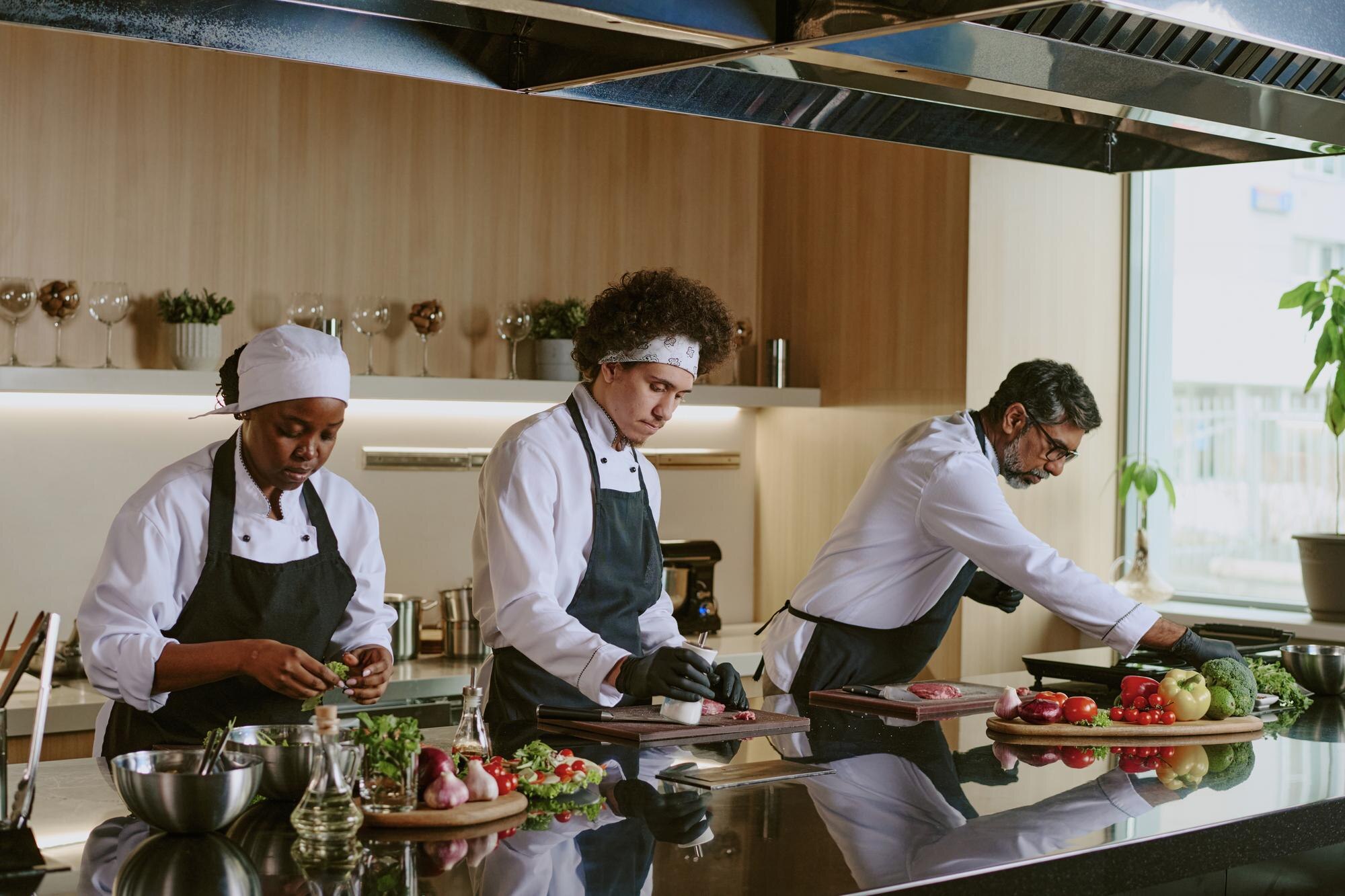
What's changed in 2026 is the operator's toolkit. Rather than running endless hiring cycles for roles that may be covered inconsistently, a growing number of restaurants, hotels, and catering companies are supplementing their core teams with on-demand kitchen staff — professionals available at short notice, pre-vetted, and ready to step into any BOH role.
Front of House vs Back of House — Where the Staffing Pressure Lives
The staffing pressure in hospitality is not distributed evenly. Front-of-house roles — servers, hosts, and floor staff — have recovered more quickly as tipped income remains a strong draw. Back-of-house is a different story.
Dishwashers, line cooks, prep cooks, and food assemblers work without tips, in physically demanding conditions, and often on split shifts. This structural disadvantage makes back-of-house staffing the single most persistent challenge in the industry. Understanding the front of house vs back of house dynamic is essential for any operator building a resilient staffing model in 2026.
On-Demand Staffing Is Now a Core Hospitality Staffing Solution
The most significant trend of the past two years is the normalisation of on-demand staffing as part of everyday kitchen operations — not just a crisis response. Platforms like DishwasherHero+ have made it possible for restaurants to access W-2 employed kitchen professionals within hours, without agency contracts or lengthy onboarding.
For operators who have struggled to maintain a full bench of BOH staff, on-demand hospitality staffing solutions function as a permanent safety net — available for no-shows, seasonal surges, and special events without increasing fixed payroll costs.
What Restaurant Operators Are Doing Differently in 2026
- Maintaining a core team of permanent staff while booking on-demand professionals for variable shifts
- Moving away from traditional staffing agency contracts toward pay-per-shift models
- Using staffing platforms that handle payroll and workers' compensation directly
- Planning BOH coverage in advance for known high-volume periods rather than reacting to shortages
- Prioritising platforms that supply W-2 employees over 1099 contractor arrangements to reduce compliance risk
The Bottom Line for 2026
The operators who thrive this year are those who treat staffing as a supply chain problem, not a hiring problem. That means building relationships with reliable on-demand partners, understanding your true BOH demand patterns, and having a system in place before the next no-show, not after.
DishwasherHero+ provides same-day back-of-house staffing for restaurants, hotels, and caterers across the United States and Canada. Every worker is a W-2 employee — background-checked, experienced, and shift-ready.
Sources
- National Restaurant Association — 2026 State of the Restaurant Industry Report: restaurant.org
- U.S. Bureau of Labor Statistics — Job Openings and Labor Turnover Survey (JOLTS), Accommodation & Food Services: bls.gov/jlt
- Statistics Canada — Labour Force Survey, Accommodation and Food Services (Table 14-10-0023-01): statcan.gc.ca