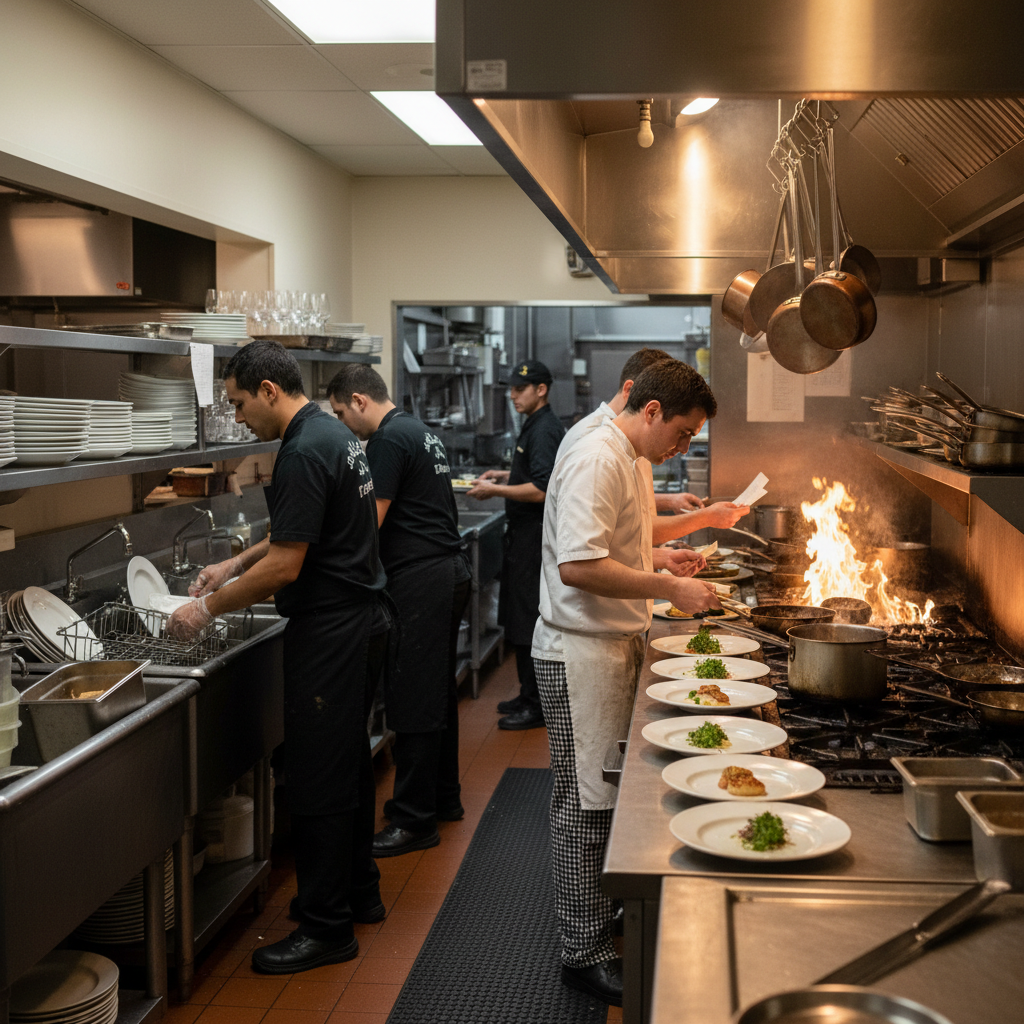
Solving the Restaurant Labor Shortage: Practical Tactics for Back-of-House Teams
Struggling with the restaurant labor shortage? Learn practical BOH staffing tactics, the importance of W-2 compliance, and how to stabilize your kitchen team.
By the DishwasherHero+ Editorial Team
The restaurant labor shortage continues to be the most significant hurdle for operators trying to maintain consistency and growth. While industry employment levels have largely recovered to pre-pandemic numbers, the "quit rate" in hospitality remains disproportionately high compared to other sectors. For restaurant owners, this means shifting from a reactive "hiring" mindset to a proactive "staffing strategy." This guide explores how utilizing W-2 employed staff and modern operational tactics can stabilize your back-of-house operations and protect your bottom line.
Key facts about restaurant labor shortage:
Back-of-house turnover rates can exceed 70% annually in high-volume environments.
The average cost to replace a single line cook is estimated at $5,864 including training and lost productivity.
72% of operators say they currently lack enough staff to meet customer demand.
In This Guide
- Understanding the root causes of the shortage
- The importance of W-2 compliance in staffing
- Optimizing BOH workflows to reduce burnout
- Leveraging on-demand labor for peak periods
- Frequently asked questions
Understanding the root causes of the shortage
The current restaurant labor shortage isn't just about a lack of people; it is about a shift in worker expectations. Back-of-house roles like prep-cooks and porters are physically demanding, and workers are increasingly seeking stability, fair classification, and better work-life balance.
The wage vs. value gap
While hourly wages have risen across the US and Canada, many operators still struggle because they view labor as a cost to be minimized rather than an investment. To attract reliable talent, you must offer more than just a paycheck; you must offer a compliant, safe, and organized working environment.
Competition with the "Gig" economy
Traditional kitchen roles are competing with the flexibility of the gig economy. However, many workers are discovering that "1099" status leaves them without social security contributions or workers' compensation. This creates an opportunity for restaurants to highlight the benefits of W-2 employment as a more secure career path.
The importance of W-2 compliance in staffing
In a rush to fill gaps, some operators turn to "under-the-table" payments or misclassify workers as independent contractors. This is a high-risk strategy that can lead to massive FLSA (Fair Labor Standards Act) fines and IRS audits. Using a provider that offers W-2 employed staff ensures that I-9 verifications, payroll taxes, and insurance are handled correctly.
FactorW-2 Employed Staff (DishwasherHero+)1099 / Independent ContractorsLiability ProtectionCovered by Workers' Comp & General LiabilityUsually No Coverage (Operator is Liable)Tax ComplianceFully compliant with IRS/CRA regulationsHigh risk of misclassification penaltiesReliabilityVetted, trained, and professionally managedLow accountability and higher "no-show" rates
Optimizing BOH workflows to reduce burnout
When you are short-staffed, the internal pressure on your remaining team increases, This creates a "churn cycle." Solving the restaurant labor shortage requires making the job easier for the people you already have. This can be achieved through better menu engineering and role specialization.
Streamlining the prep-cook station
Instead of tasking your line-cooks with heavy morning prep, consider hiring dedicated prep-cook support. This allows your primary culinary talent to focus on execution during service hours, reducing the likelihood of fatigue-driven errors.
Automating the "dirty work"
The dishwasher position is often the hardest to keep filled. Look for ways to streamline the pit, such as better racking systems or more powerful chemicals, but ultimately, ensure that your dish team is treated as the backbone of the house to improve retention.
Leveraging on-demand labor for peak periods
You no longer need to maintain a massive payroll overhead to handle your busiest shifts. Seasonal spikes, large catering events, or sudden call-outs can be managed by integrating on-demand labor into your staffing model. Whether you need a porter for a deep clean or extra event-help for a wedding, flexibility is key.
By using a platform like DishwasherHero+, you gain access to a pre-vetted pool of kitchen professionals without the administrative burden of traditional hiring. This allows you to scale your team up or down based on actual reservation counts, protecting your margins while keeping your permanent staff from reaching a breaking point.
Frequently Asked Questions
Q: How does using a staffing service help solve a restaurant labor shortage?
A: A staffing service provides immediate access to a vetted pool of W-2 employed staff, allowing you to fill gaps in your schedule without the long lead time of traditional hiring. This prevents your core team from burning out and ensures your kitchen remains operational during peak demand periods.
Q: Is W-2 compliance important when hiring temporary kitchen help?
A: Yes, W-2 compliance is critical because it ensures that all payroll taxes, workers' compensation, and unemployment insurance are covered by the employer of record. Misclassifying workers can lead to severe legal and financial penalties for your restaurant under FLSA and state laws.
Q: Can I get help for back-of-house roles on the same day?
A: DishwasherHero+ specializes in providing same-day kitchen staff for various roles, including dishwashers and prep cooks. This on-demand model allows you to react quickly to call-outs or unexpected surges in business without disrupting your service.
Key takeaways
- The hospitality industry continues to face high turnover rates, making proactive staffing strategies essential.
- W-2 compliance is critical for avoiding legal and financial penalties associated with misclassifying workers.
- Optimizing back-of-house workflows and specializing roles can reduce staff burnout and improve retention.
- On-demand labor solutions like DishwasherHero+ can provide flexible staffing for peak periods and unexpected needs, reducing administrative burden and protecting margins.
- Back-of-house turnover rates in high-volume environments can exceed 70% annually.
Frequently asked questions
How does using a staffing service help solve a restaurant labor shortage?
A staffing service provides immediate access to a vetted pool of W-2 employed staff, allowing you to fill gaps in your schedule without the long lead time of traditional hiring. This prevents your core team from burning out and ensures your kitchen remains operational during peak demand periods.
Is W-2 compliance important when hiring temporary kitchen help?
Yes, W-2 compliance is critical because it ensures that all payroll taxes, workers' compensation, and unemployment insurance are covered by the employer of record. Misclassifying workers can lead to severe legal and financial penalties for your restaurant under FLSA and state laws.
Can I get help for back-of-house roles on the same day?
DishwasherHero+ specializes in providing same-day kitchen staff for various roles, including dishwashers and prep cooks. This on-demand model allows you to react quickly to call-outs or unexpected surges in business without disrupting your service.
What is the average cost to replace a single line cook?
The average cost to replace a single line cook is estimated at $5,864, which includes both training expenses and lost productivity during the transition.
What percentage of operators lack enough staff to meet customer demand?
72% of operators report that they currently do not have enough staff to meet their customer demand effectively.
Ready to staff your kitchen this week?
See pricing and same-week availability for vetted, W-2 back-of-house staff on a 15-minute demo with our team.